
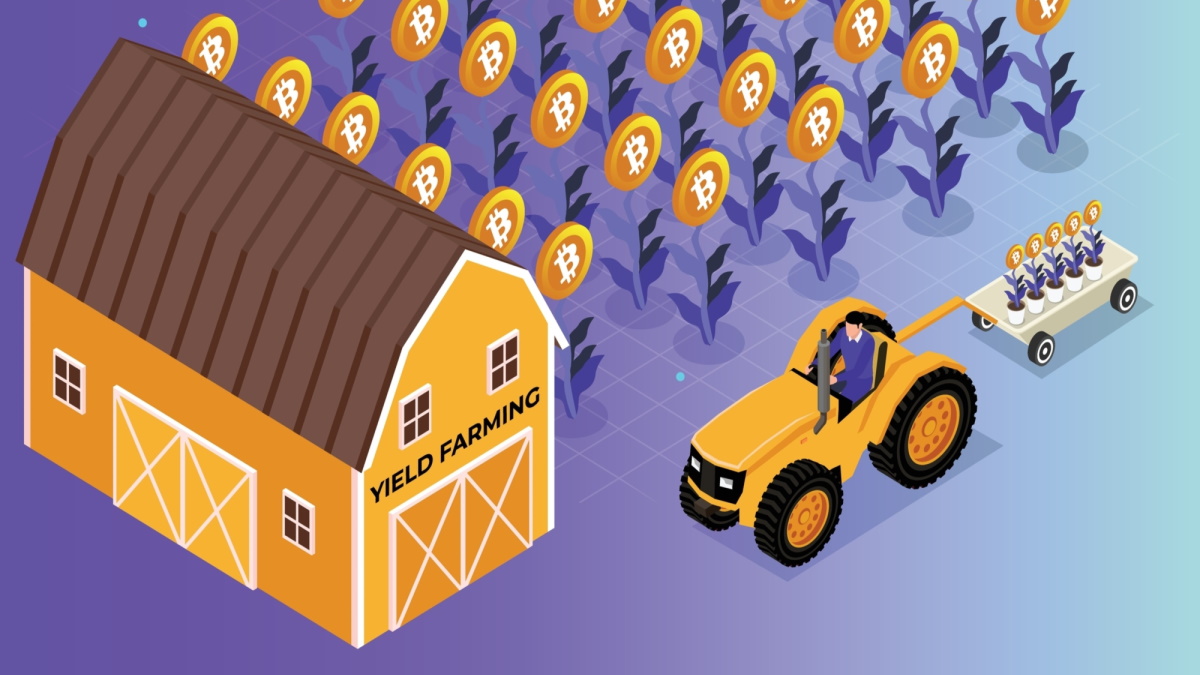
The initial “DeFi Summer” of 2020 introduced the world to Yield Farming—a revolutionary way to earn rewards by providing liquidity to decentralized protocols. However, the days of “set it and forget it” farming with triple-digit APYs on inflationary tokens are largely over.
Welcome to Yield Farming 2.0. This new era is defined by capital efficiency, sustainable tokenomics, and sophisticated financial instruments.
What is Yield Farming 2.0?
While version 1.0 focused on bootstrapping liquidity through massive token emissions, Yield Farming 2.0 prioritizes Protocol Owned Liquidity (POL) and high capital efficiency. It moves away from “mercenary capital”—liquidity that leaves as soon as rewards drop—and focuses on long-term ecosystem health.
Key Innovations:
- Concentrated Liquidity: Pioneered by Uniswap v3, allowing LPs to provide liquidity within specific price ranges.
- Real Yield: A shift toward rewards paid in established assets (like ETH or USDC) derived from actual protocol revenue rather than just “printed” governance tokens.
- LSDfi: Leveraging Liquid Staking Derivatives (like stETH) to create layers of yield on top of Ethereum’s staking rewards.
Advanced Strategies for 2.0 Farmers
To stay profitable in the current market, farmers are adopting more nuanced approaches:
1. Concentrated Liquidity Management
By narrowing the price range in which your capital operates, you can earn significantly higher fees. However, this requires active management; if the market price moves outside your range, you stop earning fees and may suffer increased impermanent loss.
2. The Delta-Neutral Strategy
Farmers use platforms like GMX or Gains Network to hedge their market exposure. By opening a short position equal to their long farming position, they neutralize price volatility, earning the farming yield while staying protected against market crashes.
3. Leveraging LSDs (Liquid Staking)
Instead of just holding ETH, users stake it to receive a receipt token (e.g., wstETH). This token can then be used as collateral on lending platforms to borrow stablecoins, which are then reinvested into other farms, effectively “stacking” the yield.
The Evolving Risk Landscape
With greater sophistication comes greater complexity. Yield Farming 2.0 isn’t without its pitfalls.
| Risk Type | Description | Mitigation Strategy |
| Smart Contract Risk | Bugs or exploits in the protocol code. | Stick to audited protocols and use insurance (e.g., Nexus Mutual). |
| De-pegging Risk | Stablecoins or LSDs losing their 1:1 value. | Diversify across different assets and protocols. |
| Toxic Flow | Being on the wrong side of arbitrage trades in concentrated pools. | Use automated liquidity managers like Arrakis or Gamma. |
| Governance Risk | Sudden changes in protocol parameters via DAO votes. | Stay active in community Discord and governance forums. |
Yield Farming 2.0 is no longer a “get rich quick” scheme; it is a professionalized sector of decentralized finance. Success in this environment requires a deep understanding of Capital Efficiency (CE), where:
CE = Generated Fees / Locked Capital
By focusing on protocols that generate “Real Yield” and utilizing advanced hedging tools, participants can still find lucrative opportunities in the DeFi space while managing the inherent risks of the frontier.
In 2025, the Liquid Staking landscape has evolved beyond simple “staking derivatives” into a complex ecosystem where Liquid Staking Tokens (LSTs) and Liquid Restaking Tokens (LRTs) serve as the primary collateral for DeFi.
Below are the top protocols dominating the space in 2025, categorized by their strengths and specific ecosystems.
1. The Heavyweights (Ethereum Ecosystem)
Ethereum remains the largest hub for liquid staking, though the focus has shifted from pure staking to Restaking (using staked ETH to secure additional services).
- Lido Finance (stETH): * Status: The undisputed market leader with over $25B+ in TVL.
- Why it’s top in 2025: It offers the deepest liquidity and widest integration. In 2025, wstETH (the wrapped version) is the “gold standard” collateral for almost every lending protocol like Aave and Spark.
- Rocket Pool (rETH):
- Status: The gold standard for decentralization.
- Why it’s top in 2025: Appeals to users who prioritize “Ethereum alignment.” Its permissionless node operator structure (allowing anyone to run a node with as little as 4 ETH) makes it more resilient to regulatory pressure than centralized alternatives.1
- Ether.fi (eETH):
- Status: The leader in the Liquid Restaking (LRT) category.
- Why it’s top in 2025: It bridges the gap between Lido and EigenLayer. By holding eETH, users earn Ethereum staking rewards plus restaking rewards from EigenLayer’s AVS (Actively Validated Services), essentially “double-stacking” yield.
2. The Speed Kings (Solana Ecosystem)
Solana’s liquid staking scene has exploded in 2025 due to its focus on MEV (Maximal Extractable Value) redistribution to stakers.
- Jito (JitoSOL):
- Status: The largest LST on Solana.
- Why it’s top in 2025: Jito rewards users not just with staking yield, but also with a share of the MEV profits captured by its specialized validator client. This consistently provides a higher APY than native staking.
- Marinade Finance (mSOL):
- Status: The pioneer of Solana staking.
- Why it’s top in 2025: Known for its “Directed Staking” feature, allowing users to support specific validators. Its Marinade Native product also offers staking without smart contract risk, a key safety feature for 2025’s risk-averse institutions.
- Sanctum:
- Status: The “Liquidity Layer” for LSTs.
- Why it’s top in 2025: Sanctum has unified the fragmented Solana LST market, allowing users to swap between hundreds of different small-cap LSTs with zero slippage, dramatically increasing the utility of niche staking tokens.
3. Emerging Stars & Multichain Protocols
- Mantle LSP (mETH): Rapidly gained market share in 2025 by offering some of the highest sustainable yields on ETH, backed by the massive Mantle Treasury.
- Babylon (BTC Staking): A breakthrough in 2025, Babylon allows Bitcoin holders to liquid-stake their BTC to secure PoS chains, creating a “Liquid Staked Bitcoin” narrative that didn’t exist in previous years.2
- Binance (WBETH): Remains the top choice for users preferring a centralized exchange (CEX) interface with the flexibility to move tokens on-chain for DeFi use.
Comparison Table: 2025 Staking Yields (Approximate)
| Protocol | Primary Token | Chain | Est. APY (2025) | Key Benefit |
| Lido | stETH | ETH | 3.0% – 3.5% | Highest Liquidity |
| Ether.fi | eETH | ETH (Restaking) | 4.5% – 6.0% | Layered Yield (Restaking) |
| Jito | JitoSOL | Solana | 6.5% – 8.0% | MEV-Boosted Rewards |
| Rocket Pool | rETH | ETH | 2.8% – 3.3% | Max Decentralization |
| Babylon | lbBTC | Bitcoin | 3.0% – 5.0% | Earn Yield on BTC |
Summary of Risks in 2025
While these protocols are established, remember that Liquid Staking 2.0 involves:
- De-pegging Risk: The LST (like stETH) might trade below the value of ETH during market panics.
- Restaking Complexity: Protocols like Ether.fi carry additional risk from the software modules they secure via EigenLayer.