
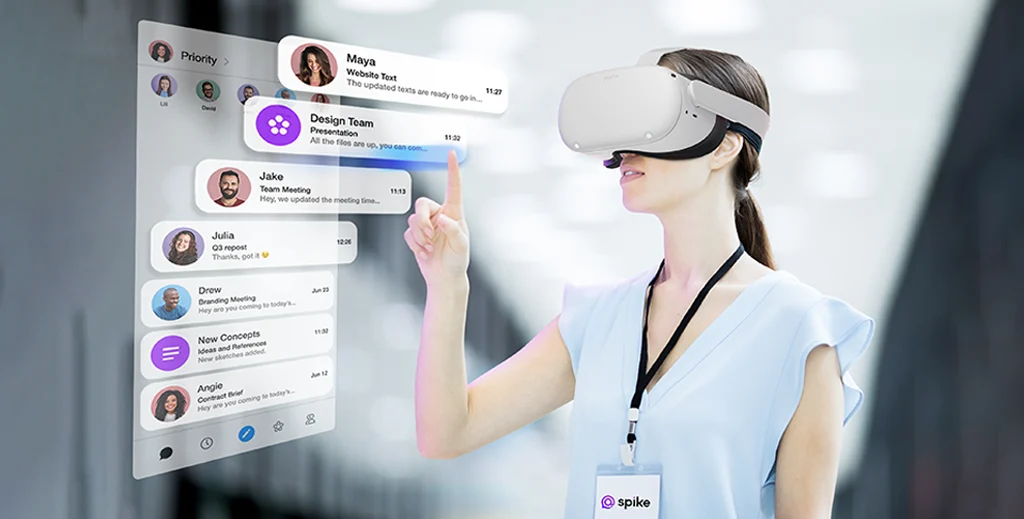
Two revolutions are colliding in the digital world:
| VR/AR | Web3 |
|---|---|
| Immersive visual & spatial interfaces that blend the physical and digital. | Decentralised infrastructure that returns data ownership, scarcity, and trust to the user. |
| Hardware‑first (headsets, glasses, haptic rigs). | Protocol‑first (blockchains, smart contracts, token economies). |
When you put them together, the result isn’t just a cooler UI—it’s a new paradigm for how people interact, transact, and even identify themselves online. In this post we’ll explore why VR/AR + Web3 matters, the concrete ways it’s already reshaping experiences, the challenges that still need solving, and the trends that will define the next five years.
TL;DR: Augmented and virtual reality give us spaces to live in; Web3 gives us ownership of those spaces. Together they turn “using an app” into “inhabiting a world you truly own.”
Why the Fusion Makes Sense
From Screens to Spaces
Traditional web experiences are still bound to 2‑D screens. VR/AR expands the canvas to three dimensions, letting users walk, point, grab, and feel. That spatial freedom opens doors for richer storytelling, more natural collaboration, and new forms of play.
From Access to Ownership
Web3’s core promise is that users own their digital assets—whether that’s a token, a piece of code, or a piece of land. In a flat UI, ownership feels abstract; in a spatial UI, you can see and interact with what you own, just like you would with a physical object.
Trustless Interactions in Real‑Time Worlds
Smart contracts execute transactions automatically, without a middleman. In a VR marketplace, you can buy a virtual sculpture, lease a piece of land, or tip a performer in the moment, with the confidence that the transaction is settled on‑chain instantly.
The “Spatial Web” Blueprint
The “Spatial Web” (sometimes called Web3.0+XR) envisions a network where every 3‑D object, scene, or experience is addressable, searchable, and programmable. Think of a URL that points to a chair you can sit on in the metaverse, not just a webpage about a chair.
Core Pillars of the New User Experience
| Pillar | What It Means in VR/AR + Web3 | Real‑World Example |
|---|---|---|
| Identity | Decentralised IDs (DIDs) that live on‑chain and can be presented as an avatar, voiceprint, or biometric tag across any headset. | World ID avatars that can log into Horizon, Decentraland, or a corporate AR dashboard with a single proof‑of‑humanity token. |
| Ownership | NFTs and soul‑bound tokens that represent objects, land, or even rights (e.g., a ticket to a virtual concert). | PixelPunk wearables bought on OpenSea, then worn in the Meta‑verse game The Sandbox. |
| Economics | Token‑driven incentives (play‑to‑earn, creator royalties, decentralized finance built into the world). | Illuvium players earn $ILV tokens for quest completion; those tokens can be staked for governance. |
| Governance | DAO‑based land councils or community‑run “city halls” where decisions are made via on‑chain voting, visible to every user. | Voxels DAO that decides zoning rules for a virtual city, with proposals displayed as holographic ballots. |
| Interoperability | Standards like WebXR, ERC‑721/1155, and EIP‑3660 let assets move across platforms without friction. | A 3‑D model minted on Polygon can be imported into both Roblox (via the Bridge) and Meta Quest directly. |
| Persistence | Worlds that remember user actions, item placements, and even physics states across sessions—all stored on decentralized storage (IPFS, Filecoin). | A virtual “garage” that keeps your custom car, its paint job, and wear‑and‑tear, regardless of which headset you use. |
Use‑Cases That Are Already Live
Gaming & Play‑to‑Earn
- Illuvium (PC + Quest) combines high‑fidelity 3‑D visuals with NFT creatures that players truly own.
- Star Atlas (XR via desktop + mixed‑reality) lets pilots buy and modify starships represented as ERC‑721 assets, then fly them in an AR overlay on a physical tabletop.
Virtual Real‑Estate & Commerce
- Decentraland now supports WebXR portals so you can walk its districts with a Quest 3 without a browser tab.
- SuperWorld (AR layer on top of real‑world maps) lets users purchase GPS‑tagged land parcels; those parcels become billboards for NFTs or AR games.
Education & Training
- Osiris Labs built a Web3‑enabled VR lab where students earn micro‑credentials stored on-chain for completing chemistry experiments.
- ARtelligence overlays blockchain‑verified certification badges on physical lab coats, instantly proving a skill set to a remote supervisor.
Social & Cultural Events
- The Fabricant hosted a 3‑D fashion runway where each outfit was an NFT that attendees could instantly purchase and wear in their own metaverse.
- VRChat integrated a wallet plug‑in that lets creators tip each other in $MANA while performing live music, with royalties distributed automatically.
Behind the Curtain: The Tech Stack
| Layer | Typical Tech | Purpose |
|---|---|---|
| Hardware | Meta Quest 3, Apple Vision Pro, Magic Leap 2, haptic gloves | Capture user motion, render stereoscopic visuals, provide tactile feedback. |
| Spatial Engine | Unity XR, Unreal Engine XR, WebXR (Three.js + Babylon.js) | Build 3‑D environments that can be streamed to any device. |
| On‑Chain Layer | Ethereum (L2s: Polygon, Arbitrum), Solana, Aptos | Store ownership, run smart contracts for transactions and DAO logic. |
| Identity | DID‑Core, Ceramic Network, Lens Protocol | Decentralised profiles that sync across worlds. |
| Storage | IPFS, Filecoin, Arweave | Persist 3‑D assets, textures, and world states. |
| Interoperability | ERC‑721/1155, EIP‑3660 “World” schemas, OpenXR | Ensure assets and experiences are portable across platforms. |
| Data & Analytics | The Graph (subgraph indexing), Ceramic streams | Real‑time insight into user behavior while respecting privacy. |
Pro tip: When building a VR/AR + Web3 product, start with interoperability first. Mint assets on a standard (ERC‑721) and expose them via a WebXR‑compatible API—this future‑proofs you as the ecosystem matures.
The Pain Points: What’s Still Holding Back?
| Challenge | Why It Matters | Emerging Solutions |
|---|---|---|
| Hardware Accessibility | High‑end headsets cost $400‑$1,500; battery life limits long sessions. | “Light‑weight” AR glasses (e.g., Nreal, Vision Pro) and cloud‑rendered XR (NVIDIA CloudXR) reduce the cost of entry. |
| Scalability of On‑Chain Transactions | Gas fees can spike during popular drops, causing “failed mints”. | Layer‑2 rollups (Optimism, zkSync) and batch‑minting techniques. |
| User‑Friendly Wallet Integration | Most wallets are still 2‑D browser extensions. | Mobile wallet SDKs that expose QR‑based “hand‑shake” to connect a headset, and invisible custodial wallets for kids. |
| Content Moderation & Safety | Immersive spaces can amplify harassment, and NFTs make “bad actors” traceable. | Decentralised reputation layers (BrightID, Proof‑of‑Humanity) combined with AI‑driven avatar filters. |
| Standardisation | Multiple competing metaverse standards lead to siloed assets. | The Metaverse Standards Forum (Meta, Microsoft, Epic) is pushing for a unified “World” schema. |
| Environmental Impact | Proof‑of‑Work blockchains consume energy; XR devices have a carbon footprint. | Migration to PoS + carbon‑offset programs, plus on‑device inference for AR rendering. |
The Roadmap: What to Expect in the Next 3‑5 Years
| Year | Milestone | Impact on User Experience |
|---|---|---|
| 2026 | WebXR becomes a W3C Recommendation – universal API for browsers, headsets, and AR glasses. | Users will no longer need a dedicated app to enter a VR space; a single link loads a fully immersive world. |
| 2027 | Full‑Stack “Spatial Wallets” – wallets that exist as 3‑D objects you can grab, open, and manage in‑world. | Managing NFTs feels like handling physical collectibles; reduces friction for non‑technical users. |
| 2028 | Cross‑Chain Asset Portability – bridges that move NFTs between Ethereum, Solana, and Polygon without gas spikes. | Creators can list a single asset on multiple marketplaces, and users can wear the same digital fashion across all games. |
| 2029 | Persistent, Decentralised Worlds – storage cost per GB drops below $0.01, making petabytes of world state cheap. | Virtual cities will keep their history, weather, and citizen data forever—no more “reset” after each season. |
| 2030 | Regulated Digital Identity + KYC‑Free Commerce – DIDs accepted by fiat gateways. | Users can buy real‑world goods in AR, pay with crypto, and have the transaction settle instantly, all without handing over personal data. |
Practical Steps for Creators & Brands
- Mint Anything as an NFT – Even a simple 3‑D model of a product should be minted on a Layer‑2 to prove scarcity.
- Design for Interoperability – Use glTF 2.0, follow the World metadata schema, and test import/export across Unity, Unreal, and WebXR.
- Integrate a Spatial Wallet Early – Platforms like MetaMask Snaps or WalletConnect VR already have SDKs for Unity.
- Leverage DAO Governance – Invite your community to co‑create world rules (e.g., zoning, event calendars). It builds loyalty and distributes risk.
- Prioritise Accessibility – Offer a 2‑D fallback (web portal) and voice‑controlled navigation for users with limited mobility.
Closing Thoughts – From “Experience” to “Existence”
We’re moving beyond the era where a website is a place you visit. In a VR/AR + Web3 world, the digital realm becomes an extension of your lived reality—one where you can own land, showcase art, earn income, and prove who you are without a gatekeeper.
If you’re a developer, start experimenting with WebXR and a testnet wallet today. If you’re a marketer, think of your brand’s digital twin not as a banner ad but as a plot of virtual land you can hand over to your most loyal fans. And if you’re just a curious user, put on a headset, open a wallet, and watch the line between “online” and “offline” blur—because it already is.
The future isn’t just on the screen. It’s all around you, and it belongs to you.