
The global dominance of Web2 social media giants like Facebook (Meta) and X (formerly Twitter) has come with a high cost: centralized control, opaque content moderation, and the commodification of user data. Decentralized Social Networks (DeSo) represent the Web3 alternative, aiming to return power, ownership, and financial control to the users.
DeSo platforms utilize blockchain technology to build social graphs and store data, eliminating the single point of failure and censorship risk inherent in centralized systems. This article provides an overview of the DeSo landscape, comparing key alternatives to the Web2 monopolies.
The Core Principles of Decentralization
Decentralized social media fundamentally differs from its Web2 predecessors in four key areas:
- Data Ownership: Your posts, photos, and connections are stored on a public, permissionless blockchain or decentralized storage network (like IPFS), not on a private company’s server. You own your data.
- Censorship Resistance: Since content is stored on a distributed ledger, no single entity (neither the company nor a government) can unilaterally delete a user’s account or content.
- Monetization & Value Capture: Users and creators are rewarded directly for their content and engagement, often through native tokens or NFTs, rather than having all value captured by the platform.
- Open Protocols: The social graph—the list of users and their connections—is public and portable. Users can move their identity and followers across different DeSo applications without starting over.
DeSo Alternatives to Twitter (Microblogging & Feeds)
The most active segment of DeSo focuses on replicating and improving the microblogging experience of X.
1. Farcaster
Farcaster is an Ethereum-based social protocol gaining significant traction among Web3 builders and creators.
- Technology: It uses an on-chain identity (Farcaster ID) tied to Ethereum, with the content (casts, likes, followers) being stored off-chain in a highly secure, decentralized network for speed and scalability.
- Key Feature: Frames: This innovation allows developers to embed interactive applications (like minting NFTs, polls, or full mini-games) directly within a cast (post). This turns the social feed into a transaction layer, blurring the line between socializing and utility.
- Monetization: Primarily focused on user-to-user tipping and potential monetization through “Frames.”
2. Bluesky
Bluesky, initially incubated by Twitter’s former CEO Jack Dorsey, operates on the AT Protocol (Authenticated Transfer Protocol).
- Technology: While decentralized in its protocol architecture, Bluesky’s central team currently operates the main service, making it a “federated” network. It is not tied to a major existing blockchain like Ethereum or Solana but is building its own open infrastructure.
- Key Feature: Algorithmic Choice: Users have the power to select and customize the algorithm that curates their feed, rather than having one enforced by a corporation. This empowers users to prioritize content based on relevance, novelty, or community preferences.
- Governance: The goal is to evolve into a fully decentralized public utility governed by the AT Protocol’s open specification.
3. Lens Protocol
Lens is a permissionless social graph built on the Polygon blockchain.
- Technology: Users own their profile as a non-fungible token (NFT), called a Profile NFT. This NFT holds all their content, followers, and history.
- Key Feature: Own Your Graph: By owning the Profile NFT, users own their social graph. If a user moves to a new Lens-enabled app, their entire follower base and content history instantly travel with them.
- Monetization: Allows creators to charge a fee (or require a specific NFT) for users to follow them (“Follow Collects”) or collect their posts (“Post Collects”), directly monetizing their audience.

DeSo Alternatives to Facebook (Content & Community)
These platforms often focus on broader content sharing, community building, and rich media, aiming to disrupt Facebook/Instagram.
1. Steemit / Hive
Steemit was one of the earliest DeSo platforms, launching in 2016. Its community later forked the project to create Hive.
- Technology: Both operate on delegated Proof-of-Stake blockchains designed specifically for social media (Steem/Hive blockchains).
- Key Feature: Proof-of-Brain: They reward users directly with native tokens for curating and creating content based on upvotes from token holders. The system rewards high-quality content and penalizes spam through community-driven moderation.
- Monetization: Built-in token rewards for every interaction (upvotes and comments).
2. Decentralized Content Platforms (e.g., Theta Network)
While not direct social media, projects like Theta focus on the decentralization of content delivery, primarily for video.
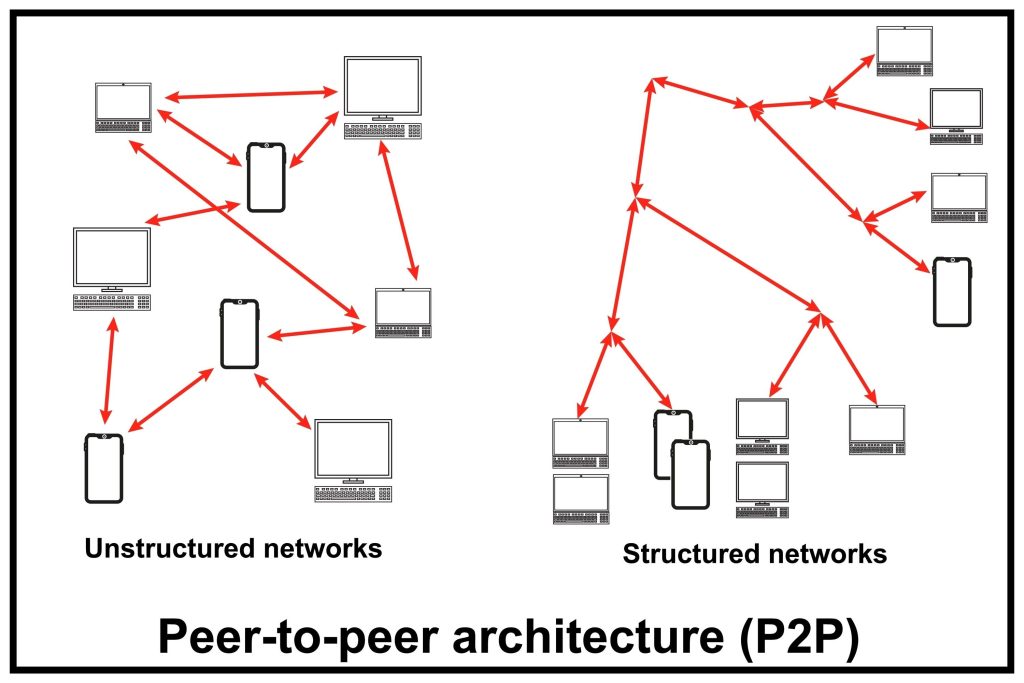
- Technology: Theta uses a peer-to-peer network for video streaming, where users are rewarded with TFUEL tokens for sharing their excess bandwidth to relay video streams.
- Impact: This reduces the reliance on centralized content distribution networks (CDNs) and lowers costs for platforms, enabling more decentralized media hosting.
The shift from Web2 to DeSo is not just about technology; it’s about a fundamental redistribution of power and value. While centralized platforms offer superior speed and ease of use today, DeSo alternatives are rapidly closing the gap by prioritizing censorship resistance, data sovereignty, and direct monetization.
The next few years will see a battle not just for users, but for the fundamental social graph itself, determining whether our digital identities remain caged within corporate walls or become portable, open assets owned by us.