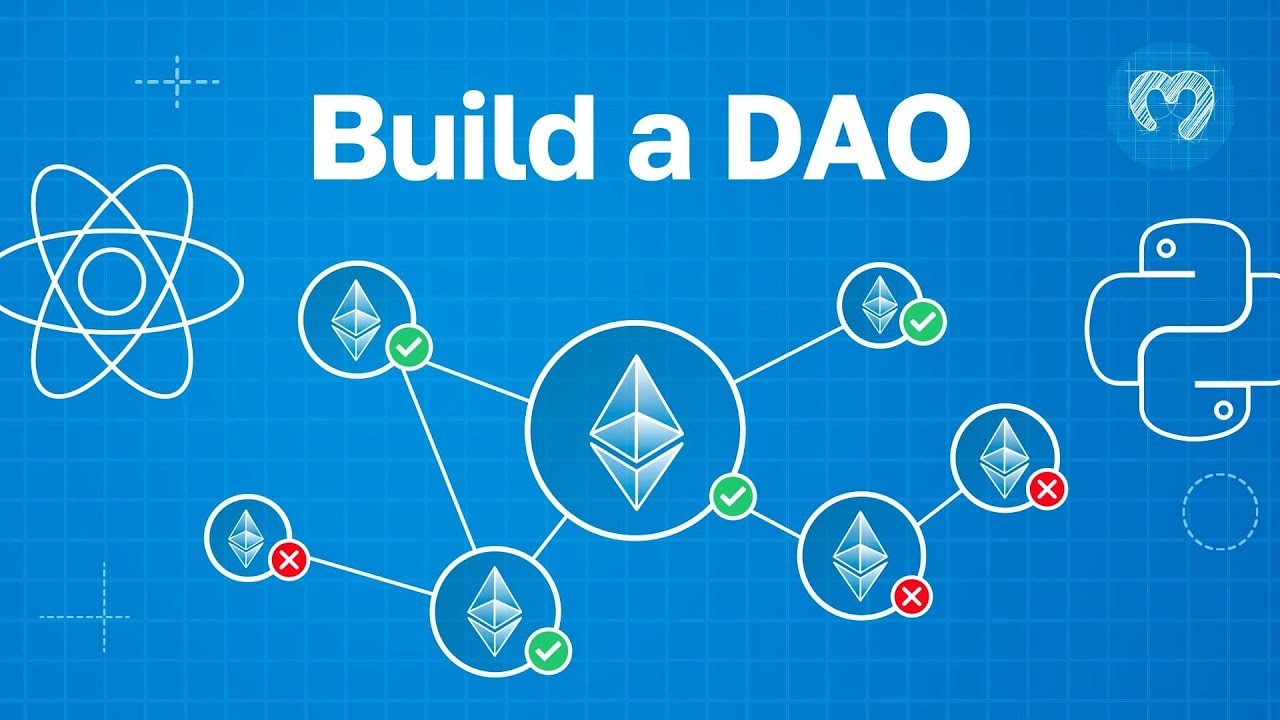
“The future of finance won’t be built by a handful of institutions—it will be orchestrated by code and the people who hold it.”
The sentence above captures a truth that has moved from theory to daily reality in just a few short years. Decentralized Autonomous Organizations (DAOs) have become the governing backbone of the most innovative DeFi (Decentralized Finance) protocols, turning what was once a centralized, opaque decision‑making process into a transparent, community‑driven engine.
In this post we’ll demystify how DAOs actually govern DeFi protocols, explore the mechanics that make it possible, showcase real‑world examples, and examine the challenges and opportunities that lie ahead.
From Governance Token to Governance Engine – The DAO Blueprint
| Component | What It Is | Why It Matters |
|---|---|---|
| Smart Contracts | Immutable on‑chain code that defines the DAO’s rules, voting logic, and treasury operations. | Guarantees that governance actions are executed exactly as voted, without a middle‑man. |
| Governance Token | A crypto‑asset (e.g., UNI, COMP, AAVE) that confers voting power proportional to holdings. | Aligns incentives—those who own the token have a stake in the protocol’s success. |
| Voting & Proposals | Formal mechanisms (single‑choice, quadratic, weighted, etc.) for members to suggest and approve changes. | Enables collective decision‑making while protecting against spam or malicious proposals. |
| Treasury | A pool of assets (often the protocol’s native token + other reserves) managed by the DAO. | Funds upgrades, incentives, and ecosystem growth without needing a centralized authority. |
| Off‑Chain Coordination | Forums, Discord, Snapshot, or governance dashboards where discussion and signaling happen. | Provides the “human” layer for debate, education, and consensus‑building before on‑chain votes. |
Together, these pieces form a self‑sustaining governance loop:
- Idea → community discussion (off‑chain).
- Proposal → encoded into a smart contract call.
- Vote → token‑weighted or quadratic method decides outcome.
- Execution → smart contract automatically enforces the change.
- Feedback → results are analyzed, further proposals are generated.
When the loop runs smoothly, the protocol can evolve at the pace of its community.
Core Governance Mechanics in DeFi DAOs
Token‑Weighted Voting
The simplest and most common model. Holding X governance tokens equals X votes.
Pros: Intuitive; aligns voting power with economic stake.
Cons: Can lead to plutocracy—large holders dominate decisions.
Quadratic Voting
Votes are priced as the square root of token amount, i.e., 1 vote costs 1 token, 2 votes cost √2 tokens, etc.
Pros: Amplifies the voice of smaller participants, discourages vote‑buying.
Cons: More complex UI; requires careful parameter tuning.
Weighted & Multi‑Sig Approvals
Some protocols require a combination of token‑weighted votes and a multi‑signature (multi‑sig) from a core council.
Pros: Adds a safety net against “flash‑loan attacks” that can temporarily amass voting power.
Cons: Introduces a semi‑centralized element, which can be at odds with the pure DAO ethos.
Time‑Locked Governance & Execution Delays
Votes may be finalized, but execution is delayed (e.g., 48‑hour timelock).
Pros: Gives the community a window to intervene if malicious code is approved.
Cons: Slower response to urgent upgrades (e.g., fixing a critical bug).
Snapshot & Off‑Chain Voting
Snapshot creates a “state” of token balances at a specific block height, enabling gas‑free voting via signed messages.
Pros: Lowers participation cost, encourages wider voter turnout.
Cons: Requires an additional “execution” step on‑chain to enact the decision.
Real‑World Examples: DAOs That Govern DeFi Protocols
| Protocol | DAO Name | Governance Token | Key Governance Action |
|---|---|---|---|
| Uniswap | Uniswap DAO | UNI | Fee structure changes, addition of new pool types, treasury allocations. |
| Aave | Aave DAO | AAVE | Risk parameter tweaks, new asset listings, “Safety Module” insurance fund decisions. |
| Compound | Compound Governance | COMP | Collateral factor updates, interest rate model changes, “Migrations” (e.g., from Compound V2 to V3). |
| Curve | Curve DAO | CRV | Emission schedules, gauge weight adjustments, integration of new stablecoin pools. |
| Balancer | Balancer DAO | BAL | Protocol fee adjustments, new pool designs, treasury grants for ecosystem projects. |
| SushiSwap | Sushi DAO | SUSHI | “SushiBar” staking yield rates, “Kashi” lending module upgrades, community grants. |
Case Study: The Aave “Risk Parameter” Vote
In March 2024, the Aave DAO voted to increase the Loan‑to‑Value (LTV) ratio for a newly listed collateral token (WBTC). The proposal passed with a 68% majority under quadratic voting, unlocking higher borrowing capacity. The change was automatically executed after a 48‑hour timelock, and the market responded with a 12% surge in WBTC borrowing volume, showing how DAO governance can directly influence protocol liquidity and user behavior.
Why DAOs Matter for DeFi Governance
Transparency
Every proposal, vote, and treasury movement is recorded on the blockchain, auditable by anyone. This builds trust—particularly vital when large sums (often > $1B) sit in protocol treasuries.
Censorship‑Resistance
No single entity can unilaterally freeze or redirect funds. Governance outcomes are enforced by immutable code, not by a boardroom.
Incentive Alignment
Token holders profit from protocol success (price appreciation, yield farming). Hence, they have a vested interest in prudent governance.
Speed & Agility
Traditional finance can take weeks or months to approve a new product. DAO‑driven DeFi can iterate in days, responding to market demands or security threats swiftly.
Community‑Driven Innovation
Developers and users can submit proposals for new features (e.g., cross‑chain bridges, novel lending models). This opens a pipeline for open‑source innovation that a central team might overlook.
The Dark Side: Governance Risks & Challenges
| Challenge | Explanation | Mitigation Strategies |
|---|---|---|
| Voter Apathy | Low participation leads to decisions being made by a handful of whales. | Implement quadratic voting, voting rewards (e.g., “gov‑token airdrops”), and education campaigns. |
| Governance Attacks | Flash‑loan attacks can temporarily acquire enough tokens to pass malicious proposals. | Use time‑locks, multi‑sig councils, or “guardrails” that require a secondary approval step. |
| Token Concentration | A few wallets hold > 30% of supply, creating potential centralization. | Distribute tokens via liquidity mining, airdrops, or vesting schedules; consider non‑token‑based voting (e.g., reputation). |
| Complexity of Proposals | Technical proposals can be opaque to non‑technical voters, leading to uninformed decisions. | Create “proposal summaries,” community webinars, and third‑party audit reports before voting. |
| Legal Uncertainty | Some jurisdictions view DAOs as unregistered investment clubs or companies. | Adopt DAO‑LLC structures (e.g., Wyoming DAO LLC) or consult legal counsel for jurisdiction‑specific compliance. |
| Execution Bugs | Malformed proposals can introduce smart‑contract bugs that lock funds. | Require a “pre‑execution simulation” phase and an independent audit before code deployment. |
Emerging Trends Shaping DAO Governance in DeFi
- Layer‑2 & Rollup Integration
DAOs are migrating voting and treasury management to cheaper L2 solutions (e.g., Optimism, Arbitrum) to lower gas costs and improve participation. - Cross‑Chain Governance
Protocols like Wormhole DAO enable token‑weighted voting across multiple chains, opening up truly multi‑chain ecosystems. - Reputation‑Based Models
Projects such as Proof of Humanity and Gitcoin Grants DAO experiment with non‑token reputation (e.g., contributions, on‑chain activity) as voting power. - AI‑Assisted Proposal Analysis
Tools leveraging large language models can summarize technical proposals, flag potential risks, and even simulate economic impact. - DAO‑as‑a‑Service (DaaS)
Platforms like Snapshot, Aragon, and DAOhaus provide plug‑and‑play governance suites, lowering the barrier for new DeFi protocols to launch DAO structures.
How to Get Involved – A Quick Starter Guide
| Step | What to Do | Tools & Resources |
|---|---|---|
| 1. Choose a DAO | Identify a DeFi protocol you use or believe in (e.g., Aave, Uniswap). | Visit the protocol’s website → “Governance” page. |
| 2. Acquire Governance Tokens | Purchase via DEXes (Uniswap, SushiSwap) or earn through liquidity mining. | Use MetaMask + a reputable DEX. |
| 3. Set Up a Voting Wallet | Connect a hardware wallet (Ledger/Trezor) or a secure hot wallet. | MetaMask, WalletConnect, or hardware wallet UI. |
| 4. Follow the Discussion | Join Discord, Telegram, or forum threads for proposal previews. | Discord channels, Reddit r/DeFi, or the protocol’s Discord. |
| 5. Vote | Use Snapshot for gas‑free voting, or vote directly on‑chain through the DAO’s UI. | Snapshot.org, the protocol’s governance dashboard. |
| 6. Monitor Outcomes | Track treasury moves, token price impact, and community sentiment post‑vote. | Dune Analytics dashboards, Nansen, or Glassnode. |
Pro tip: Start small. Even a modest token holding can influence decisions on niche parameters (e.g., fee tiers). As you become more comfortable, consider delegating votes to trusted community members or joining a “voting coalition”.
The Future Outlook: DAOs as the Operating System of DeFi
The trajectory is clear: DAOs will evolve from “governance modules” to full‑stack operating systems for financial services. Imagine a world where:
- Inter‑protocol governance enables a consortium of DAOs to coordinate cross‑protocol risk parameters (e.g., a unified oracle pricing standard).
- Self‑amending protocols automatically propose upgrades based on on‑chain performance metrics, awaiting only a cursory community endorsement.
- Legal‑tech bridges embed jurisdiction‑specific compliance directly into DAO smart contracts, allowing protocol participants to opt‑in to regulatory frameworks on demand.
These possibilities aren’t fantasy; pilot projects like DAOstack’s Alchemy, Gnosis Safe’s Multi‑Sig DAO, and Celo’s Governance-as-a-Service are already laying the groundwork.
TL;DR – Key Takeaways
| ✅ | Takeaway |
|---|---|
| DAOs = Code + Community | Smart contracts enforce decisions made by token holders and stakeholders. |
| Governance Tokens = Voice & Stake | Holding tokens aligns incentives but can lead to centralization—quadratic voting and reputation systems help mitigate this. |
| Transparency & Speed | Every proposal and vote is on‑chain, enabling rapid iteration unlike traditional finance. |
| Risks Exist | Voter apathy, flash‑loan attacks, and legal ambiguities require robust guardrails. |
| Get Involved | Acquire tokens, join discussions, vote on Snapshot, and watch the impact on protocol health. |
| Future = DAO‑Powered DeFi | Cross‑chain, AI‑augmented, and legally interoperable DAOs will become the “operating system” of the next financial era. |
Bottom line: Decentralized Autonomous Organizations have moved from an intriguing concept to the beating heart of DeFi governance. By handing power to code and community, DAOs empower anyone with a token to shape the future of finance—provided we navigate the challenges wisely.
If you’re ready to be part of this governance revolution, start by exploring your favorite DeFi protocol’s DAO today. Your vote could be the catalyst that writes the next chapter of decentralized finance.
Happy governing!
References & Further Reading
- “The Rise of DAO Governance” – Harvard Business Review, 2023.
- Aave Governance Documentation – https://docs.aave.com/governance
- Snapshot Voting Guide – https://snapshot.org/help
- “Quadratic Voting in Crypto” – Ethereum Foundation Blog, 2022.
- Aragon DAO Framework – https://aragon.org
Feel free to comment below with questions or your own DAO experiences!