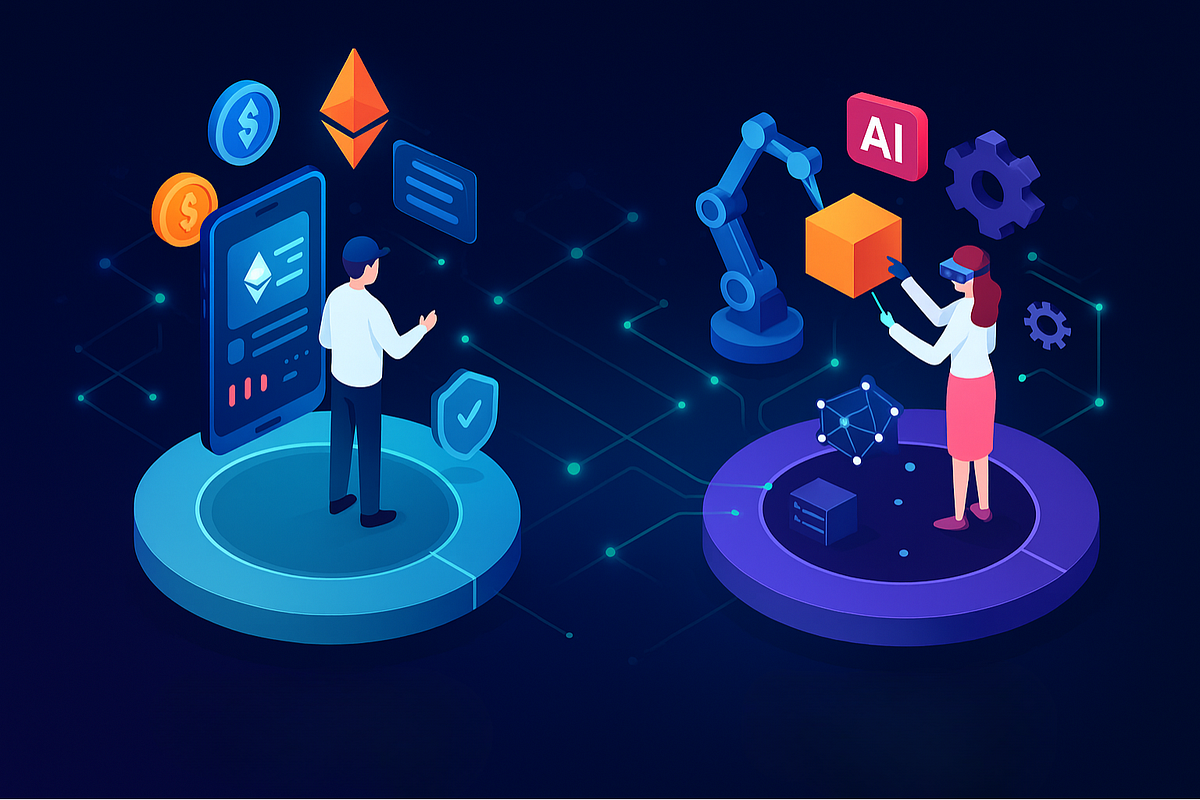
The synergy between Artificial Intelligence (AI) and blockchain technology is fostering a new paradigm known as Decentralized AI (DeAI). This convergence aims to address the critical risks associated with centralized AI—namely, data monopolization, lack of transparency, security vulnerabilities, and single points of failure. By leveraging the distributed, immutable, and transparent nature of blockchain, DeAI platforms are creating more democratic, secure, and collaborative AI ecosystems.
The Case for Decentralization in AI
Centralized AI systems are predominantly controlled by a few colossal corporations that hoard vast amounts of data and computational resources. This concentration of power leads to several challenges:
- Data Privacy and Ownership: Users lose control over their data, which is essential for training proprietary AI models.
- Lack of Transparency: The ‘black box’ nature of centralized models makes it difficult to audit their decision-making processes, raising ethical and fairness concerns.
- Censorship and Monopolization: Central authorities can dictate access to AI services and stifle competition, hindering innovation.
- Security Vulnerabilities: A single point of failure makes the entire system susceptible to massive data breaches and malicious attacks.
Decentralized AI mitigates these risks by distributing control, data storage, and processing across a peer-to-peer network. Blockchain acts as a secure and verifiable infrastructure, enabling AI models and data to be shared, monetized, and governed transparently using smart contracts.
Key Projects in the Decentralized AI Landscape
Several pioneering projects are actively building the foundational layer for a decentralized AI future. These platforms offer marketplaces, tools, and protocols for creating, sharing, and monetizing AI services.
1. SingularityNET (AGIX)
- Core Concept: SingularityNET is an open-source, decentralized platform and marketplace for AI services. It aims to be a global brain for decentralized Artificial General Intelligence (AGI).
- Functionality: It allows developers to create and deploy their AI services (e.g., image recognition, natural language processing) on the blockchain. These services can then interact and form complex workflows, effectively becoming a collaborative network of AI agents.
- Blockchain Role: Blockchain ensures that transactions between AI agents and consumers are transparent, verifiable, and secure, while the native AGIX token facilitates payments and network governance. The marketplace democratizes access to AI algorithms, removing intermediaries.
2. Ocean Protocol (OCEAN)
- Core Concept: Ocean Protocol is a blockchain-based data exchange platform designed to unlock the value of data for AI and machine learning while preserving privacy and sovereignty.
- Functionality: It enables data owners to tokenize their datasets as Data NFTs and datatokens (ERC-20 tokens), which control access to the data. This allows for monetization without the data ever leaving the provider’s possession. The key feature, Compute-to-Data (C2D), allows algorithms to be run on the private data, and only the results are returned, thereby protecting sensitive information.
- Blockchain Role: Blockchain provides an immutable record of data provenance, usage, and payments. The OCEAN token is used for governance, staking, and incentivizing the supply of high-quality data assets.
3. Fetch.ai (FET)
- Core Concept: Fetch.ai is a decentralized network that combines AI and blockchain to create an open, permissionless, and autonomous economic ecosystem. Its focus is on Autonomous Economic Agents (AEAs).
- Functionality: These AI agents can act on behalf of individuals, services, or devices (e.g., optimizing supply chains, finding the best energy deals, or scheduling transportation). They operate within a digital world where they can discover, communicate, and transact with other agents. Collective Learning (CoLearn) allows agents to collaboratively train models while keeping the underlying data decentralized.
- Blockchain Role: The native blockchain provides a secure, decentralized ledger for agent interactions and transactions. The FET token is the medium of exchange used to pay for network fees, deploy agents, and access AI services.
The Future Trajectory
The integration of AI and blockchain is still in its nascent stages, yet it promises to fundamentally reshape the digital economy. DeAI is paving the way for:
- Democratization of AI: Making powerful AI tools accessible to researchers, developers, and businesses globally, not just tech giants.
- Enhanced Data Privacy: Allowing data to be used for model training without compromising individual or corporate privacy.
- Trustworthy AI: Creating systems where AI decision-making processes are transparent and auditable, fostering greater trust in automated systems.
As these projects mature, they will form the backbone of a new generation of Web3 applications, moving us toward a future of genuinely intelligent, open, and user-controlled digital services.